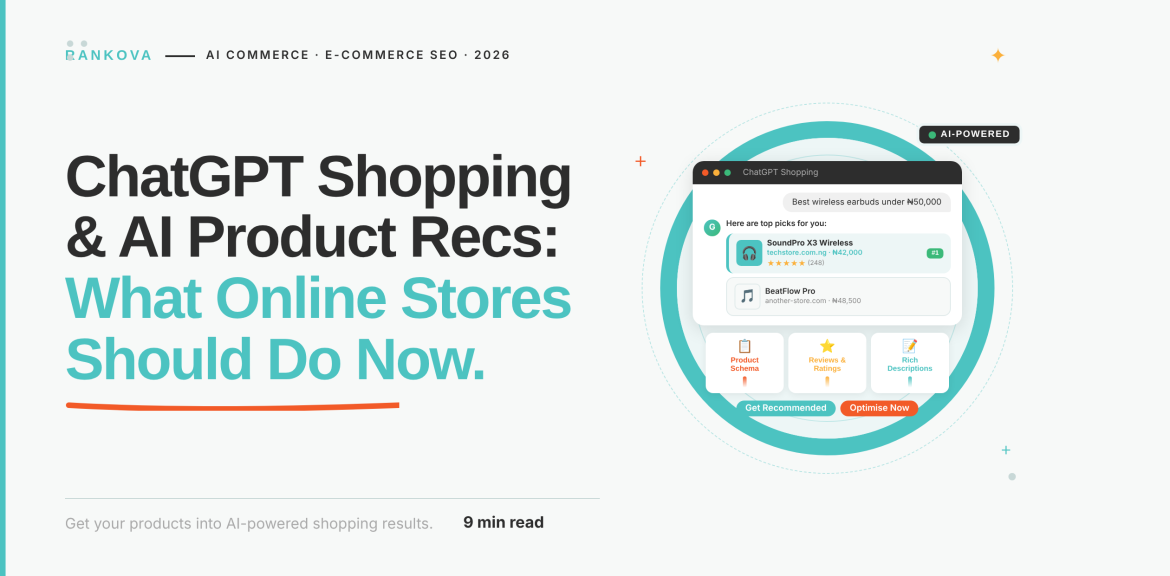
On 24 November 2025, OpenAI introduced shopping research in ChatGPT, a feature that asks shoppers about their budget and needs, reads product websites, and builds a personal buyer’s guide in minutes. Since then, ChatGPT has become a place where people discover and compare products.
Many store owners worry that ChatGPT will take all the attention and leave independent stores behind. That is a wrong assumption. ChatGPT does not sell the products itself. It reads public retail websites, compares them, and sends the shopper to the store’s own website to pay. In March 2026, OpenAI moved away from in-chat checkout, so the sale now happens on your site.
That is good news for online stores. Salesforce attributed $262 billion of 2025 holiday sales to AI and agent influence. Stores that understand how ChatGPT chooses products can earn a share of that demand.
This guide explains how ChatGPT shopping and AI product recommendations work, and the steps your store should take now. Let’s get into it.
Key takeaways
- ChatGPT finds and compares products, but it does not sell them. Since OpenAI introduced shopping research in November 2025, shoppers can get a personal buyer’s guide in minutes, then pay on the store’s own website.
- Your store must be readable. ChatGPT uses public retail websites, product data feeds, and reviews.
- Product pages decide a lot. Clear titles, full details, real prices, and good photos help ChatGPT match your product to the shopper.
- Accuracy wins. When several stores sell the same item, ChatGPT weighs price, stock, quality, and who sells it first-hand.
- Reviews and mentions matter. ChatGPT trusts what other websites say about your products.
- Your own checkout matters again. OpenAI stepped back from in-chat buying in March 2026, so every sale from ChatGPT now happens on your website.
What is ChatGPT shopping?
ChatGPT shopping is the set of tools inside ChatGPT that helps people find, compare, and choose products by chatting. Shoppers describe what they need. So. ChatGPT replies with product picks, photos, prices, and links to stores.
Shoppers meet it in two ways:
- Quick product answers. A shopper asks a simple question, such as “best power bank for a long trip”. ChatGPT shows a few product cards with prices and store links.
- Shopping research. For bigger decisions, ChatGPT offers a deeper search. OpenAI launched shopping research in November 2025. It asks about budget and needs, reads many websites, and builds a personal buyer’s guide in a few minutes.
When the shopper picks a product, ChatGPT sends them to the store’s website to pay.
OpenAI first let shoppers buy some items inside ChatGPT. It was called Instant Checkout. In March 2026, OpenAI stepped back from it after a few stores joined, CNBC reported. ChatGPT now focuses on helping people discover products while the sale happens on your website. That puts the pressure back on your product pages and your site’s checkout.
Why does ChatGPT shopping matter for your online store?
ChatGPT now shapes which products shoppers consider, long before they visit any store. If it leaves you out at that stage, you may never get a chance to compete on price or service.
The early numbers point one way:
- Shoppers already use AI to compare products. A quarter of consumers used AI tools to compare products in October 2025, according to Capgemini’s 2026 consumer trends report. Another 31% plan to.
- Most AI shopping questions come early. Similarweb found that most shopping prompts it studied were about interest and comparison.
- ChatGPT’s influence hides in your reports. In the same research, shoppers who started in ChatGPT and bought later through another route outnumbered direct ChatGPT clicks about five to one.
For Nigerian online stores, there is a second reason. Many shoppers worry about fake products and unreliable sellers. When ChatGPT names a store, it acts like a trusted friend’s recommendation. That trust is hard to buy with ads.
How does ChatGPT choose which products to recommend?
ChatGPT combines three kinds of information to recommend a product. These are product data, your product pages, and what other websites say about you. It then picks the products that best match the shopper’s needs.
- Product data: ChatGPT receives product details such as titles, prices, and stock from data providers and directly from some stores. Shopify stores share this automatically through the Shopify Catalog.
- Your product pages: OpenAI says shopping research reads public retail websites directly. It cites sources and avoids low-quality or spammy sites.
- What others say: Reviews, comparison articles, and trusted websites help ChatGPT judge quality and fit.
When several stores sell the same product, OpenAI says ChatGPT ranks them by availability, price, quality, and whether the store is the maker or main seller. ChatGPT may also tailor picks to what it remembers about the shopper, such as their budget or style.
Note that the size of your company does not matter. Hence, a small store with accurate information can sit beside a giant.
Step-by-step Guide for ChatGPT Shopping and AI Product Recommendations.
Here are steps to follow if you want your business to maximize ChatGPT shopping and AI product recommendations;
Step 1: Let ChatGPT see your store
ChatGPT cannot recommend products it cannot read. So, make sure nothing on your website blocks it.
OpenAI uses a robot called OAI-SearchBot to read websites for ChatGPT search. OpenAI’s crawler guide says sites that block it will not appear in ChatGPT’s search answers. This is the same “allowlisting” OpenAI asks merchants to do for shopping research.
Ask your web developer to check four things:
- robots.txt allows OAI-SearchBot – This small file tells robots what they can read.
- Your security tools let it through – Firewalls and services like Cloudflare can block AI robots without telling you.
- Product pages are public – Shoppers and robots should see prices and details without logging in.
- Text loads without extra code – Some store themes only show product details after scripts run. Robots may see an empty page.
Our guide to fixing a website Google won’t index covers the same access problems.
Step 2: Make your product pages clear and complete
Write every product page so a stranger can tell what the product is, who it suits, and what it costs, without asking you. ChatGPT needs the same clarity to match your product to a shopper’s request.
Shoppers ask ChatGPT long, specific questions. “Lightweight laptop bag that fits a 15-inch laptop, under ₦30,000, delivered in Abuja.” A page that only says “Classic Bag – Black” cannot answer that. A page with size, price, material, and delivery details can. Build each page around these parts:
- Say the title, the key feature, and who it’s for.
- In two or three sentences, explain what the product does and why it’s a good choice.
- List sizes, materials, colours, weight, and care instructions.
- Show the product from several angles and in use.
- Show the naira price, delivery areas, delivery times, and payment options, such as pay on delivery.
- Answer what customers ask on WhatsApp every week: “Is it original?” “Can I return it?” or “Does it fit a 15-inch laptop?”
Also keep your returns, delivery, and warranty policies easy to find. Shopify notes that AI shopping assistants may use these pages when answering shoppers. Product schema markup helps machines read your price, stock, and ratings too. Our plain-English guide to schema explains it.
Step 3: Share your product data directly
A product feed is a file that lists every product with its price, stock, photos, and details. It lets ChatGPT read your catalog without guessing.
OpenAI says ChatGPT gets product details from third-party data providers and straight from the merchant. Stores that want ChatGPT to always show their latest prices and stock can apply to send OpenAI a direct feed. OpenAI publishes the product feed rules for developers.
Step 4: Build reviews and mentions
ChatGPT trusts what other people say about your products more than what you say about them. Genuine reviews and mentions give it that proof.
OpenAI trained shopping research to read trusted websites and cite reliable sources. Similarweb’s analysis adds that ChatGPT draws on store reviews, marketplace reviews, “best of” articles, and forums.
Work on four kinds of proof:
- Reviews on your own website. Ask every buyer for a review after delivery. Make it easy, for example, with a short WhatsApp message and a link.
- Reviews on marketplaces and Google. If you sell on Jumia or Konga, or serve local customers, those reviews count too. Our guide to getting more Google reviews in Nigeria shows how to ask without feeling awkward.
- “Best of” articles. Bloggers and news sites publish lists like “best skincare brands in Nigeria”. Offer them samples or useful facts so they consider you.
- Honest community answers. Answer product questions in forums and groups your buyers use. Help first. Sell second.
Encourage detailed reviews. “Fits my 15-inch laptop and survived the rainy season” helps ChatGPT far more than “Nice bag!” It matches the way shoppers describe their needs. Also, don’t buy fake reviews.
Step 5: Keep prices, stock, and checkout accurate
ChatGPT favours stores it can rely on. Wrong prices or out-of-stock items damage both your ranking and your reputation.
OpenAI lists availability and price among its ranking factors. Shopify reports that ChatGPT often highlights the cheapest offer it knows and may label it “Best price”. OpenAI also admits that shopping research can get prices and stock wrong, and tells shoppers to check the store’s website. If your website and your feed disagree, the shopper finds out at the worst moment: just before paying.
Protect yourself with a simple routine:
- Update prices the same day they change. This matters most when exchange rates move.
- Mark items out of stock immediately. Never leave a sold-out product looking available.
- Show delivery facts clearly. State delivery areas, times, and fees on every product page.
Remember that the sale now happens on your website and not on ChatGPT. A shopper who arrives from ChatGPT is ready to buy. Don’t lose them at the last step. So, do the following;
- Make pages fast on phones. Most Nigerian shoppers browse on mobile data. See Core Web Vitals explained.
- Offer the payment options your buyers trust. Card, bank transfer, pay on delivery, or a WhatsApp order button.
- Keep checkout short. Every extra form field costs you sales.
Step 6: Track your AI shopping visibility
Check every month whether ChatGPT recommends your products, and measure the visitors it sends.
- Run a monthly product check. List 20 to 30 questions your customers might ask. Ask ChatGPT each one. Note whether your products appear, which competitors appear, and which websites ChatGPT cites. The share of questions where you appear is your progress score.
- Watch your website visits. Google Analytics groups visits from ChatGPT and similar tools under a channel called AI Assistant. Treat that number as a minimum. In October 2026, Search Engine Land reported that ChatGPT seems to have stopped tagging its links, so some visits now appear as “direct” traffic.
- Look beyond clicks. Many shoppers see your product in ChatGPT, then search your store name later. Rising branded searches and direct visits can signal that ChatGPT is working for you.
- Ask your customers. Add “ChatGPT or another AI tool” to your “How did you hear about us?” question at checkout or on WhatsApp.
Mistakes that keep online stores out of ChatGPT
Most stores miss out for simple, fixable reasons. Avoid these:
- “DM for price.” ChatGPT cannot quote a price you hide. Shoppers who ask “under ₦50,000” will never see you.
- Selling only on Instagram and WhatsApp. These channels work for sales, but ChatGPT needs a website it can read. Build product pages that carry the same details.
- Copying supplier descriptions word for word. If fifty stores use the same text, nothing sets you apart. Write your own.
- Stuffing titles with keywords. “Bag Bag Ladies Bag Best Bag Lagos” confuses shoppers and machines. Write titles people can read.
- Leaving sold-out items live. ChatGPT may recommend a product you cannot deliver. That costs you trust.
- Waiting for in-chat checkout to return. OpenAI stepped back from it. Your own website and checkout are what count now.
- Buying fake reviews. They break platform rules and destroy trust once found.
How Rankova helps online stores win in ChatGPT shopping
You can do every step in this guide yourself. Most store owners are busy running the business. Rankova does the work for you.
Here is how we help:
- We check that ChatGPT can see your store. We review your robots.txt, security settings, and platform settings, and fix what blocks AI robots.
- Rankova tests your products in ChatGPT. We ask the questions your customers ask. So, we show you which competitors appear instead of you, and why.
- We rewrite your product pages. We turn vague listings into clear, complete pages that shoppers and ChatGPT understand.
- We clean up your product data. We make your prices, stock, and details match across your website, feeds, and marketplaces.
- Rankova builds your reputation. We help you earn genuine reviews and mentions on the websites ChatGPT trusts.
- We track and report. Every month, you see where your products appear in ChatGPT and other AI tools, in plain English.
- We know the Nigerian market. We understand how your customers shop on mobile, how they order on WhatsApp, and which payment options they trust. Our guide on the best AEO agency for e-commerce in Nigeria explains our approach in more detail.
We promise work that gives your products the best chance and clear reporting on the results.
Frequently Asked Questions about ChatGPT Shopping and AI Product Recommendations.
Here are some of the frequently asked questions about ChatGPT shopping and AI product recommendations;
Question 1: Can shoppers still buy products inside ChatGPT?
Mostly no. OpenAI stepped back from Instant Checkout in March 2026. Today, ChatGPT helps shoppers find and compare products. Shoppers then pay on the store’s own website.
Question 2: Can I pay to appear in ChatGPT shopping results?
Not in the organic results. OpenAI says shopping research results are organic and based on public retail websites. ChatGPT also runs ads, but they appear as labelled ads, separate from the recommendations.
Question 3: Do I need a Shopify store to appear in ChatGPT?
No. Shopify stores share product data automatically, which helps. However, stores on WooCommerce or other platforms can still appear. They need open access for ChatGPT’s robot, clear product pages, and accurate data.
Question 4: Can a small online store compete with big brands?
Yes. ChatGPT looks for the products that best match the shopper’s needs. Hence, clear details, fair prices, accurate stock, and reviews matter more than company size.
Question 5: How long does it take to appear in ChatGPT recommendations?
You can judge your progress over three months.
Conclusion
ChatGPT is becoming the first stop for many shoppers. It recommends products it can read, understand, and trust. So, open your store to it, make every product page clear, keep your data accurate, and earn reviews (both positive and negative). These same steps also help you on Google, so the effort pays twice.
Do you want to know whether ChatGPT recommends your products today? Talk to Rankova. We will test your products in ChatGPT, check what blocks your store, and show you what to fix first.
Read more
How to get cited by Google AI Overviews
What Is Answer Engine Optimization? A Complete Guide for Business Owners
How to get cited by Perplexity (step-by-step)
How to make AI systems recognise and trust your brand
GEO vs SEO vs AEO: what’s the difference?
How to rank on Google in Nigeria
How to Get Cited by ChatGPT (Step-by-Step)
Sources
Introducing shopping research in ChatGPT
Buy it in ChatGPT: Instant Checkout and the Agentic Commerce Protocol
OpenAI shifts away from Instant Checkout
How ChatGPT Shopping works for ecommerce stores